
Question 1
Useful Data has been mentioned above.
This data attachment is just for a reference & not for an evaluation.
The IIT Madras BS Statistics for Data Science II (Stats 2) End Term paper sat on 10 May 2026, in the January 2026 term: 51 questions for 93 marks in 180 minutes. Every question is below with its answer. Take it as a timed mock test to be marked, or read it through first.
Useful Data has been mentioned above.
This data attachment is just for a reference & not for an evaluation.
Correct answer
Useful Data has been mentioned above.
Useful Data has been mentioned above.
This data attachment is just for a reference & not for an evaluation.
Correct answer
Useful Data has been mentioned above.
Suppose are i.i.d random variables with E[ ]= and Var( = for . Let
be an estimator of . Find the mean squared error (MSE) of .


—
Correct answer
Let . The prior distribution of has the following PMF:
Consider the samples S: { }. Find the posterior probability using Bayes' theorem. Enter the answer correct to two decimal places.
A written answer, not marked automatically.
The probability density function of a random variable is given as
Find the value of .


Correct answer
Let be a sample from a normal distribution having a variance of 25. We wish to test the hypothesis against . Consider a test that rejects for , where is the sample mean. Find the value of at a significance level . Enter the answer correct to two decimal places.
A written answer, not marked automatically.
A pharmaceutical company produces vaccine vials, and historically, the probability that a vial is defective is . A new sterilization method is introduced, and the company wants to test whether this method has changed the defect rate and, specifically, whether it has increased the probability of defective vials. To test this, 250 vials are produced using the new process and inspected. The company will reject the new sterilization method if the total number of defective vials is greater than 7 out of 250. Using the normal approximation to the binomial distribution, find the significance level of the test.
Enter the correct option number for .
A written answer, not marked automatically.
The time (in minutes) passengers spend in the airport security line during a quiet period follows a continuous uniform distribution . The waiting times (in minutes) from a random sample of 5 passengers are as follows: Find the method of moments estimate of .
A written answer, not marked automatically.
A pharmaceutical company produces vaccine vials, and historically, the probability that a vial is defective is . A new sterilization method is introduced, and the company wants to test whether this method has changed the defect rate and, specifically, whether it has increased the probability of defective vials. To test this, 250 vials are produced using the new process and inspected. The company will reject the new sterilization method if the total number of defective vials is greater than 7 out of 250. Using the normal approximation to the binomial distribution, find the significance level of the test.
Enter the correct option number for .
A written answer, not marked automatically.
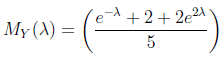
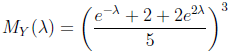
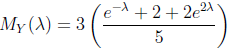
Let be a discrete random variable with PMF as follows:
Suppose i.i.d. . Define a new random variable . Which of the following option(s) is (are) true about the moment generating function of the random variable ?
—
—
Correct answers
—
A pharmaceutical company produces vaccine vials, and historically, the probability that a vial is defective is . A new sterilization method is introduced, and the company wants to test whether this method has changed the defect rate and, specifically, whether it has increased the probability of defective vials. To test this, 250 vials are produced using the new process and inspected. The company will reject the new sterilization method if the total number of defective vials is greater than 7 out of 250. Using the normal approximation to the binomial distribution, find the significance level of the test.
Enter the correct option number for .
A written answer, not marked automatically.
Let be i.i.d. samples from and be i.i.d. samples from . The observed sample means are and . We wish to test the hypotheses: against . Consider a test that rejects if Let denote the significance level of the test and denote the cumulative distribution function (CDF) of the standard normal distribution. Express the critical value in terms of and . Select all the option(s) that apply.
—
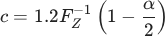
—
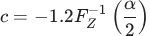
Correct answers
A pharmaceutical company produces vaccine vials, and historically, the probability that a vial is defective is . A new sterilization method is introduced, and the company wants to test whether this method has changed the defect rate and, specifically, whether it has increased the probability of defective vials. To test this, 250 vials are produced using the new process and inspected. The company will reject the new sterilization method if the total number of defective vials is greater than 7 out of 250. Using the normal approximation to the binomial distribution, find the significance level of the test.
Enter the correct option number for .
A written answer, not marked automatically.
Let be a discrete random variable with probability mass function:
Consider the random sample {1, 2, 1, 2}. Assume that the prior distribution of is uniform on Based on the above data, answer the given subquestions.
Which of the following is the correct likelihood function based on the given sample?
—
—
—
—
Correct answer
—
A pharmaceutical company produces vaccine vials, and historically, the probability that a vial is defective is . A new sterilization method is introduced, and the company wants to test whether this method has changed the defect rate and, specifically, whether it has increased the probability of defective vials. To test this, 250 vials are produced using the new process and inspected. The company will reject the new sterilization method if the total number of defective vials is greater than 7 out of 250. Using the normal approximation to the binomial distribution, find the significance level of the test.
Calculate the value for . Enter the answer correct to three decimal place.
A written answer, not marked automatically.
Let be a discrete random variable with probability mass function:
Consider the random sample {1, 2, 1, 2}. Assume that the prior distribution of is uniform on Based on the above data, answer the given subquestions.
Find the posterior mean of using the given prior distribution. Enter the answer correct to one decimal place.
A written answer, not marked automatically.
Let be i.i.d. samples from and be i.i.d. samples from . The observed sample means are and . We wish to test the hypotheses: against Consider a test that rejects if Let denote the significance level of the test and denote the cumulative distribution function (CDF) of the standard normal distribution. Express the critical value in terms of and . Select all the option(s) that apply.
—
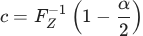
—
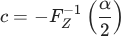
Correct answers
Let be a discrete random variable with PMF as follows:
Define another random variable . Based on the above data, answer the given subquestions.
What is the standard deviation of ? Enter the answer correct to two decimal places.
A written answer, not marked automatically.
Let be a discrete random variable taking values {1, 2, 3} with respective probabilities
, where is a parameter. Consider the samples {1, 2, 2, 1, 3, 2, 1, 3, 2, 3} from . Using a Uniform[0, 1] prior, find the posterior mean of . Enter the answer correct to two decimal places.
A written answer, not marked automatically.
Let be a discrete random variable with PMF as follows:
Define another random variable . Based on the above data, answer the given subquestions.
Find Cov .
A written answer, not marked automatically.
Let be a discrete random variable with probability mass function:
Consider the random sample {2,3,1}. Assume that the prior distribution of is Gamma . Based on the above data, answer the given subquestions.
Which of the following is the correct likelihood function based on the given sample?
—
—
—
—
Correct answer
—
The joint PDF of two random variables and is given by
Based on the above data, answer the given subquestions.
Find the value of .
3

6

Correct answer
3
Let be a discrete random variable with probability mass function:
Consider the random sample {2,3,1}. Assume that the prior distribution of is Gamma . Based on the above data, answer the given subquestions.
Find the posterior mean of using the given prior distribution.
A written answer, not marked automatically.
The joint PDF of two random variables and is given by
Based on the above data, answer the given subquestions.
Find the value of . Enter the answer correct to two decimal places.
A written answer, not marked automatically.
A discrete random variable has the following probability mass function :
Based on the above data, answer the given subquestions.
If , then find the value of .
A written answer, not marked automatically.
A factory produces light bulbs. The manufacturer claims that the probability that a randomly selected bulb is defective is 0.1. Ravi suspects that the defect rate is actually higher than claimed. To test this, he randomly selects 10 bulbs from the production line. If two or more bulbs are found to be defective, he rejects the manufacturer's claim; otherwise, he accepts it. Based on the above data, answer the given subquestions.
Define the null hypothesis and the alternative hypothesis.
—
—
—
—
Correct answer
—
A discrete random variable has the following probability mass function :
Based on the above data, answer the given subquestions.
Define a new random variable . Find the value of . Enter the answer correct to one decimal place.
A written answer, not marked automatically.
A factory produces light bulbs. The manufacturer claims that the probability that a randomly selected bulb is defective is 0.1. Ravi suspects that the defect rate is actually higher than claimed. To test this, he randomly selects 10 bulbs from the production line. If two or more bulbs are found to be defective, he rejects the manufacturer's claim; otherwise, he accepts it. Based on the above data, answer the given subquestions.
Find the significance level of the test. Enter the answer correct to three decimal places.
A written answer, not marked automatically.
Let the random variable represent the number of trials required to achieve a certain outcome in an experiment, where {1, 2, 3, 4, 5, 6}. The probability that the outcome occurs in 1 to 5 trials is each, while the probability that it takes 6 trials is . A random sample of five independent observations of is recorded as: 4, 2, 5, 3, 1 Based on the above data, answer the given subquestions.
Find the method of moments estimate of for the given sample. Enter the answer correct to one decimal place.
A written answer, not marked automatically.
Let be a random variable with mean and variance . Let and be the sample means of two independent random samples of sizes and , respectively, drawn from the distribution of . Consider the estimator where and are constants such that . Is an unbiased estimator of ?
Yes
No
Correct answer
Yes
Let the random variable represent the number of trials required to achieve a certain outcome in an experiment, where {1, 2, 3, 4, 5, 6}. The probability that the outcome occurs in 1 to 5 trials is each, while the probability that it takes 6 trials is . A random sample of five independent observations of is recorded as: 4, 2, 5, 3, 1 Based on the above data, answer the given subquestions.
The experiment is considered efficient if the expected number of trials required to achieve the outcome is at most 4. Using the estimated value of , determine whether this requirement is satisfied.
The requirement is satisfied.
The requirement is not satisfied.
Correct answer
The requirement is satisfied.
Let be a random variable with mean and variance . Let and be the sample means of two independent random samples of sizes and , respectively, drawn from the distribution of . Consider the estimator where and are constants such that .
Enter the correct option number for .
A written answer, not marked automatically.
A box contains some green balls and some yellow balls. Meera claims that if a ball is picked randomly from the box, then the probability that the ball will be green is 0.25. Arjun suspects that this probability is too high. To test the claim, he randomly picks 8 balls from the box. If two or more green balls are obtained among the 8 balls, then he accepts Meera's claim; otherwise, he rejects it. Based on the above data, answer the given subquestions.
Define the null hypothesis and the alternative hypothesis.
—
—
—
—
Correct answer
—
Let be a random variable with mean and variance . Let and be the sample means of two independent random samples of sizes and , respectively, drawn from the distribution of . Consider the estimator where and are constants such that .
Enter the correct option number for .
A written answer, not marked automatically.
A box contains some green balls and some yellow balls. Meera claims that if a ball is picked randomly from the box, then the probability that the ball will be green is 0.25. Arjun suspects that this probability is too high. To test the claim, he randomly picks 8 balls from the box. If two or more green balls are obtained among the 8 balls, then he accepts Meera's claim; otherwise, he rejects it. Based on the above data, answer the given subquestions.
Find the significance level of the test. Enter the answer correct to three decimal places.
A written answer, not marked automatically.
Let be a random variable with mean and variance . Let and be the sample means of two independent random samples of sizes and , respectively, drawn from the distribution of . Consider the estimator where and are constants such that .
Enter the correct option number for .
A written answer, not marked automatically.
Suppose . Based on the above data, answer the given subquestions.
Find the value of for which . Enter the answer correct to one decimal place.
A written answer, not marked automatically.
Let be a random variable with mean and variance . Let and be the sample means of two independent random samples of sizes and , respectively, drawn from the distribution of . Consider the estimator where and are constants such that .
Enter the correct option number for .
A written answer, not marked automatically.
Suppose . Based on the above data, answer the given subquestions.
Find . Enter the answer correct to two decimal places.
A written answer, not marked automatically.
Let be a random variable with mean and variance . Let and be the sample means of two independent random samples of sizes and , respectively, drawn from the distribution of . Consider the estimator where and are constants such that .
Calculate the value for . Enter the answer correct to two decimal places.
A written answer, not marked automatically.
A pharmaceutical company produces vaccine vials, and historically, the probability that a vial is defective is . A new sterilization method is introduced, and the company wants to test whether this method has changed the defect rate and, specifically, whether it has increased the probability of defective vials. To test this, 250 vials are produced using the new process and inspected. The company will reject the new sterilization method if the total number of defective vials is greater than 7 out of 250. Using the normal approximation to the binomial distribution, find the significance level of the test.
A written answer, not marked automatically.
Let be a discrete random variable with probability mass function:
Consider the random sample {2,3,1}. Assume that the prior distribution of is Gamma . Based on the above data, answer the given subquestions.
A written answer, not marked automatically.
A discrete random variable has the following probability mass function :
Based on the above data, answer the given subquestions.
A written answer, not marked automatically.
Let the random variable represent the number of trials required to achieve a certain outcome in an experiment, where {1, 2, 3, 4, 5, 6}. The probability that the outcome occurs in 1 to 5 trials is each, while the probability that it takes 6 trials is . A random sample of five independent observations of is recorded as: 4, 2, 5, 3, 1 Based on the above data, answer the given subquestions.
A written answer, not marked automatically.
A box contains some green balls and some yellow balls. Meera claims that if a ball is picked randomly from the box, then the probability that the ball will be green is 0.25. Arjun suspects that this probability is too high. To test the claim, he randomly picks 8 balls from the box. If two or more green balls are obtained among the 8 balls, then he accepts Meera's claim; otherwise, he rejects it. Based on the above data, answer the given subquestions.
A written answer, not marked automatically.
Suppose . Based on the above data, answer the given subquestions.
A written answer, not marked automatically.
Let be a discrete random variable with probability mass function:
Consider the random sample {1, 2, 1, 2}. Assume that the prior distribution of is uniform on Based on the above data, answer the given subquestions.
A written answer, not marked automatically.
Let be a discrete random variable with PMF as follows:
Define another random variable . Based on the above data, answer the given subquestions.
A written answer, not marked automatically.
The joint PDF of two random variables and is given by
Based on the above data, answer the given subquestions.
A written answer, not marked automatically.
A factory produces light bulbs. The manufacturer claims that the probability that a randomly selected bulb is defective is 0.1. Ravi suspects that the defect rate is actually higher than claimed. To test this, he randomly selects 10 bulbs from the production line. If two or more bulbs are found to be defective, he rejects the manufacturer's claim; otherwise, he accepts it. Based on the above data, answer the given subquestions.
A written answer, not marked automatically.
Let be a random variable with mean and variance . Let and be the sample means of two independent random samples of sizes and , respectively, drawn from the distribution of . Consider the estimator where and are constants such that .
A written answer, not marked automatically.