
Question 1
Instructions has been mentioned above.
This Instructions is just for a reference & not for an evaluation.

The IIT Madras BS Mathematics for Data Science I (Maths 1) End Term paper sat on 10 May 2026, in the January 2026 term: 15 questions for 51 marks in 180 minutes. Every question is below with its answer. Take it as a timed mock test to be marked, or read it through first.
Instructions has been mentioned above.
This Instructions is just for a reference & not for an evaluation.
Correct answer
Instructions has been mentioned above.
—
—
—
—
Correct answer
—
—
—
—
—
Correct answer
—
Inscript
A written answer, not marked automatically.
A written answer, not marked automatically.
.
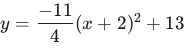
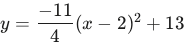
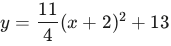
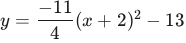
Correct answer
.
has turning points.
has turning points.
as .
as
Correct answers
has turning points.
as .
If we perform Depth First Search at node 0, then one of the possible order in which the nodes will be visited is 05142367
If we perform Depth First Search at node 0, then one of the possible order in which the nodes will be visited is 01453672
If we perform Breadth First Search at node 0, then one of the possible order in which the nodes will be visited is 01542367
If we perform Depth First Search at node 0, then one of the possible order in which the nodes will be visited is 01543267
Correct answers
If we perform Depth First Search at node 0, then one of the possible order in which the nodes will be visited is 05142367
If we perform Depth First Search at node 0, then one of the possible order in which the nodes will be visited is 01453672
If we perform Breadth First Search at node 0, then one of the possible order in which the nodes will be visited is 01542367
A written answer, not marked automatically.
A written answer, not marked automatically.
A written answer, not marked automatically.
A written answer, not marked automatically.
A written answer, not marked automatically.
A written answer, not marked automatically.
Which of the following statements are correct?
Dijkstra’s algorithm can be used to find the minimum weight spanning tree in a graph.
Bellman-Ford algorithm can be used to indicate whether a graph has negative weight cycles or not.
Bellman-Ford algorithm provides a solution for the single source shortest path problem.
Floyd-Warshall algorithm is applicable for graphs that contain negative cycles.
Correct answers
Bellman-Ford algorithm can be used to indicate whether a graph has negative weight cycles or not.
Bellman-Ford algorithm provides a solution for the single source shortest path problem.