uiz Space

May 2025 term · Machine Learning Practice · BSCS2008

Machine Learning Practice End Term: 31 August 2025, Set 1 (May 2025 term)

The IIT Madras BS Machine Learning Practice (MLP) End Term paper sat on 31 Aug 2025, in the May 2025 term, set 1: 30 questions for 54 marks in 180 minutes. Every question is below with its answer. Take it as a timed mock test to be marked, or read it through first.

Questions
30
Marks
54
Duration
180 min
MCQ
13
MSQ
8
Written
9

Updated

Official paper: IIT M IMPROVEMENT AN EXAM QIC4 31 Aug · No negative marking.

Question 1

+1 markOne correct option

THIS IS QUESTION PAPER FOR THE SUBJECT "DIPLOMA LEVEL : MACHINE LEARNING PRACTICE (COMPUTER BASED EXAM)" ARE YOU SURE YOU HAVE TO WRITE EXAM FOR THIS SUBJECT? CROSS CHECK YOUR HALL TICKET TO CONFIRM THE SUBJECTS TO BE WRITTEN. (IF IT IS NOT THE CORRECT SUBJECT, PLS CHECK THE SECTION AT THE TOP FOR THE SUBJECTS REGISTERED BY YOU)

  1. A

    YES

  2. B

    NO

Show answer

Correct answer

  • A

    YES

Question 2

+2 marksOne correct option
Figure from the original question paper
  1. A

    10

  2. B

    50

  3. C

    100

  4. D

    500

Show answer

Correct answer

  • A

    10

Question 3

+2 marksOne correct option
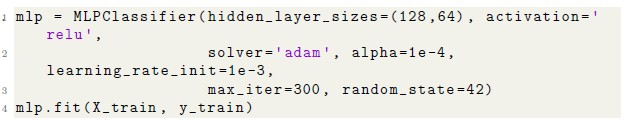
Figure from the original question paper
  1. A

    Set ‘warm start=True’

  2. B

    Combine training data from different training sessions

  3. C

    Set ‘retain parameters=True’

  4. D

    This problem can not be solved.

Show answer

Correct answer

  • A

    Set ‘warm start=True’

Question 4

+2 marksOne correct option
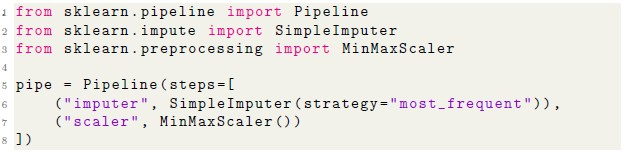
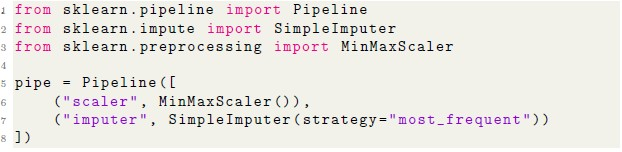
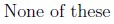
Figure from the original question paper
  1. A
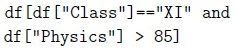
    Figure from the original question paper
  2. B
    Figure from the original question paper
  3. C
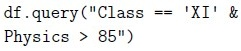
    Figure from the original question paper
  4. D
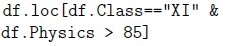
    Figure from the original question paper
Show answer

Correct answer

  • A
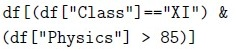
    Figure from the original question paper

Question 5

+2 marksOne correct option
Figure from the original question paper
  1. A

    (200, 200, 3)

  2. B

    (40000, )

  3. C

    (200, 200, 1)

  4. D

    (40000, 3)

Show answer

Correct answer

  • B

    (40000, )

Question 6

+2 marksOne correct option
Figure from the original question paper
  1. A
    Figure from the original question paper
  2. B
    Figure from the original question paper
  3. C
    Figure from the original question paper
  4. D
    Figure from the original question paper
  5. E
    Figure from the original question paper
Show answer

Correct answer

  • A
    Figure from the original question paper

Question 7

+2 marksOne correct option

Which of the following statements about the Augmented Dickey-Fuller (ADF) test is correct?

  1. A

    The test is used to detect seasonality in a time series

  2. B

    A low p-value (e.g., < 0.05) indicates the time series is non-stationary

  3. C

    The test’s null hypothesis is that the time series is stationary

  4. D

    A low p-value (e.g., < 0.05) indicates the time series is stationary

Show answer

Correct answer

  • D

    A low p-value (e.g., < 0.05) indicates the time series is stationary

Question 8

+1 markOne correct option

How to change the loss function in SGDRegressor to Huber loss?

  1. A
    Figure from the original question paper
  2. B
    Figure from the original question paper
  3. C
    Figure from the original question paper
  4. D
    Figure from the original question paper
Show answer

Correct answer

  • A
    Figure from the original question paper

Question 9

+1 markOne correct option
Figure from the original question paper
  1. A

    liblinear

  2. B

    lbfgs

  3. C

    saga

  4. D

    newton-cg

Show answer

Correct answer

  • C

    saga

Question 10

+1 markOne correct option
Figure from the original question paper
  1. A
    Figure from the original question paper
  2. B
    Figure from the original question paper
  3. C
    Figure from the original question paper
  4. D
    Figure from the original question paper
  5. E
    Figure from the original question paper
Show answer

Correct answer

  • A
    Figure from the original question paper

Question 11

+3 marksOne correct option

Which of the following best describes the components of a time series in a classical multiplicative decomposition model?

  1. A

    The series is a product of a trend component and an error component only

  2. B

    The series is a sum of a trend component, a seasonal component, and acyclical component

  3. C

    The series is a product of a trend component, a seasonal component, and anerror component

  4. D

    The series is a sum of a trend component, a seasonal component, and a errorcomponent

Show answer

Correct answer

  • C

    The series is a product of a trend component, a seasonal component, and anerror component

Question 12

+3 marksOne or more correct options
Figure from the original question paper

Select all that apply.

  1. A
    Figure from the original question paper
  2. B
    Figure from the original question paper
  3. C
    Figure from the original question paper
  4. D
    Figure from the original question paper
  5. E
    Figure from the original question paper
Show answer

Correct answers

  • A
    Figure from the original question paper
  • B
    Figure from the original question paper

Question 13

+2 marksOne or more correct options
Figure from the original question paper

Select all that apply.

  1. A

    Saves computation time by reusing results of expensive transformations wheninputs and parameters have not changed.

  2. B

    Helps speed up repeated runs of cross-validation involving the sametransformation steps.

  3. C

    Reduces CPU usage by running transformations in parallel threadsautomatically.

  4. D

    Improves efficiency in hyperparameter search by avoiding redundantcomputations in pipeline steps.

  5. E

    Guarantees better generalization performance on the test set.

Show answer

Correct answers

  • A

    Saves computation time by reusing results of expensive transformations wheninputs and parameters have not changed.

  • B

    Helps speed up repeated runs of cross-validation involving the sametransformation steps.

  • D

    Improves efficiency in hyperparameter search by avoiding redundantcomputations in pipeline steps.

Question 14

+2 marksOne or more correct options
Figure from the original question paper

Select all that apply.

  1. A
    Figure from the original question paper
  2. B
    Figure from the original question paper
  3. C
    Figure from the original question paper
  4. D
    Figure from the original question paper
Show answer

Correct answers

  • A
    Figure from the original question paper
  • B
    Figure from the original question paper
  • C
    Figure from the original question paper

Question 15

+2 marksOne or more correct options

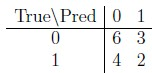
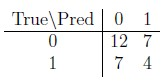
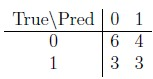
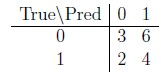
A medical diagnosis model is used to detect a rare disease that occurs in 0.5% of the population. A model is trained on this data, which of the following evaluation metrics are suitable for measuring effectiveness of this model:

Select all that apply.

  1. A

    accuracy

  2. B

    precision

  3. C

    recall

  4. D

    F-1 score

Show answer

Correct answers

  • B

    precision

  • C

    recall

  • D

    F-1 score

Question 16

+2 marksOne or more correct options
Figure from the original question paper

Select all that apply.

  1. A

    The elbow method involves plotting the number of clusters against the inertiaand identifying a point where the decrease in inertia slows down.

  2. B

    The elbow point represents the cluster count beyond which additional clustersdo not significantly improve the model fit.

  3. C

    The metric used in the elbow method is the silhouette score.

  4. D

    The elbow point is always the smallest number of clusters in the plot.

  5. E

    The elbow method may sometimes be inconclusive if no clear bend is visible inthe curve.

Show answer

Correct answers

  • A

    The elbow method involves plotting the number of clusters against the inertiaand identifying a point where the decrease in inertia slows down.

  • B

    The elbow point represents the cluster count beyond which additional clustersdo not significantly improve the model fit.

  • E

    The elbow method may sometimes be inconclusive if no clear bend is visible inthe curve.

Question 17

+3 marksWritten answer
Figure from the original question paper
Show answer

A written answer, not marked automatically.

Question 18

+3 marksWritten answer
Figure from the original question paper
Show answer

A written answer, not marked automatically.

Question 19

+1 markOne or more correct options

Based on the above data, answer the given subquestions.

Based on the above data, answer the given subquestions.
Figure from the original question paper

Select all that apply.

  1. A
    Figure from the original question paper
  2. B
    Figure from the original question paper
  3. C
    Figure from the original question paper
  4. D
    Figure from the original question paper
Show answer

Correct answers

  • A
    Figure from the original question paper
  • C
    Figure from the original question paper

Question 20

+2 marksOne correct option

Based on the above data, answer the given subquestions.

Based on the above data, answer the given subquestions.
Figure from the original question paper
  1. A
    Figure from the original question paper
  2. B
    Figure from the original question paper
  3. C
    Figure from the original question paper
  4. D
    Figure from the original question paper
Show answer

Correct answer

  • A
    Figure from the original question paper

Question 21

+2 marksOne or more correct options

Based on the above data, answer the given subquestions.

Based on the above data, answer the given subquestions.
Figure from the original question paper

Select all that apply.

  1. A
    Figure from the original question paper
  2. B
    Figure from the original question paper
  3. C
    Figure from the original question paper
  4. D
    Figure from the original question paper
Show answer

Correct answers

  • A
    Figure from the original question paper
  • C
    Figure from the original question paper

Question 22

+2 marksOne correct option

Based on the above data, answer the given subquestions.

Based on the above data, answer the given subquestions.

select the appropriate values for A and B in the loss parameter to ensure that all model fits execute successfully.

  1. A
    Figure from the original question paper
  2. B
    Figure from the original question paper
  3. C
    Figure from the original question paper
  4. D
    Figure from the original question paper
Show answer

Correct answer

  • D
    Figure from the original question paper

Question 23

+2 marksOne or more correct options

Based on the above data, answer the given subquestions.

Based on the above data, answer the given subquestions.
Figure from the original question paper

Select all that apply.

  1. A
    Figure from the original question paper
  2. B
    Figure from the original question paper
  3. C
    Figure from the original question paper
  4. D
    Figure from the original question paper
Show answer

Correct answers

  • B
    Figure from the original question paper
  • D
    Figure from the original question paper

Question 24

+1 markWritten answer

Based on the above data, answer the given subquestions.

Based on the above data, answer the given subquestions.
Figure from the original question paper
Show answer

A written answer, not marked automatically.

Question 25

+1 markWritten answer

Based on the above data, answer the given subquestions.

Based on the above data, answer the given subquestions.

Calculate and enter the value of X (truncated to two decimal places).

Show answer

A written answer, not marked automatically.

Question 26

+1 markWritten answer

Based on the above data, answer the given subquestions.

Based on the above data, answer the given subquestions.

Calculate and enter the value of Y (truncated to two decimal places).

Show answer

A written answer, not marked automatically.

Question 27

+3 marksWritten answer

Based on the above data, answer the given subquestions.

Based on the above data, answer the given subquestions.
Figure from the original question paper
Show answer

A written answer, not marked automatically.

Question 28

+1 markWritten answer

Based on the above data, answer the given subquestions.

Based on the above data, answer the given subquestions.
Show answer

A written answer, not marked automatically.

Question 29

+1 markWritten answer

Based on the above data, answer the given subquestions.

Based on the above data, answer the given subquestions.
Show answer

A written answer, not marked automatically.

Question 30

+1 markWritten answer

Based on the above data, answer the given subquestions.

Based on the above data, answer the given subquestions.
Show answer

A written answer, not marked automatically.