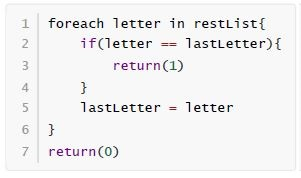
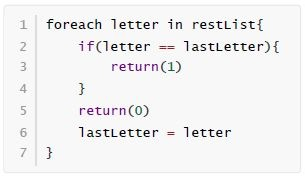
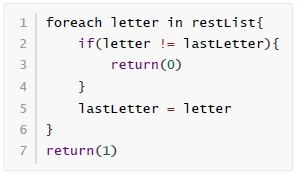
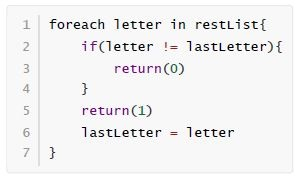
The following pseudocode is executed using the "Olympics" dataset. At the end of the execution, medalDict stores a dictionary with player's name as key mapped to another dictionary. The nested dictionary stores the medal type as key mapped to a list of years in which the player won that medal. For example if player Xyz has won a silver medal in 2006, a gold medal in 2008, and another silver medal in 2011, then medalDict = {"Xyz" : {"Silver" : [2006, 2011], "Gold" : [2008]}, ... } Assume that every player has a distinct name. But the pseudocode may have mistakes. Identify all such mistakes (if any). Assume that all statements not listed in the options below are free of errors. It is a Multiple Select Question (MSQ).
The following pseudocode is executed using the "Olympics" dataset. At the end of the execution, medalDict stores a dictionary with player's name as key mapped to another dictionary. The nested dictionary stores the medal type as key mapped to a list of years in which the player won that medal. For example if player Xyz has won a silver medal in 2006, a gold medal in 2008, and another silver medal in 2011, then medalDict = {"Xyz" : {"Silver" : [2006, 2011], "Gold" : [2008]}, ... } Assume that every player has a distinct name. But the pseudocode may have mistakes. Identify all such mistakes (if any). Assume that all statements not listed in the options below are free of errors. It is a Multiple Select Question (MSQ).