uiz Space

May 2026 term · Deep Learning for Computer Vision · BSDA5006

Deep Learning for Computer Vision Quiz 1: 19 July 2026 (May 2026 term)

The IIT Madras BS Deep Learning for Computer Vision (Deep Learning for Computer Vision) Quiz 1 paper sat on 19 Jul 2026, in the May 2026 term: 13 questions for 13 marks in 120 minutes. Every question is below with its answer. Take it as a timed mock test to be marked, or read it through first.

Questions
13
Marks
13
Duration
120 min
MCQ
5
Written
8

Updated

Official paper: Deep Learning For Computer Vision 16 Jul 26 · No negative marking.

Question 1

+1 markOne correct option

In the Canny edge detector, which is the correct order of major steps?

  1. A

    Non-maximum suppression → Gaussian smoothing → gradient computation → hysteresis thresholding

  2. B

    Gaussian smoothing → gradient computation → non-maximum suppression → hysteresis thresholding

  3. C

    Gradient computation → Gaussian smoothing → hysteresis thresholding → non-maximum suppression

  4. D

    Gaussian smoothing → hysteresis thresholding → non-maximum suppression → gradient computation
Show answer

Correct answer

  • B

    Gaussian smoothing → gradient computation → non-maximum suppression → hysteresis thresholding

Question 2

+1 markOne correct option

Which is True?

  1. A

    Nesterov momentum looks ahead and often converges faster than classical momentum.

  2. B

    large fixed learning rate always speeds convergence.

  3. C

    Adam uses only a first-moment estimate of gradients.

  4. D

    None of these.

Show answer

Correct answer

  • A

    Nesterov momentum looks ahead and often converges faster than classical momentum.

Question 3

+1 markOne correct option

Correct order of SIFT stages is:

  1. A

    Orientation → Descriptor → Localization → Extrema Detection

  2. B

    Extrema Detection → Localization → Orientation → Descriptor

  3. C

    Extrema Detection → Descriptor → Localization → Orientation

  4. D

    None of these

Show answer

Correct answer

  • B

    Extrema Detection → Localization → Orientation → Descriptor

Question 4

+1 markOne correct option

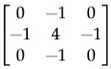
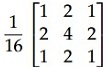
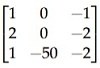
Which of the following 3 × 3 kernels is separable?

  1. A
    Figure from the original question paper
  2. B
    Figure from the original question paper
  3. C
    Figure from the original question paper
  4. D
    Figure from the original question paper
Show answer

Correct answer

  • C
    Figure from the original question paper

Question 5

+1 markOne correct option

Consider the following pyTorch code:

Consider the following pyTorch code:
  1. A

    tensor([0.09, 0.24, 0.67])

  2. B

    tensor([0.09, 0.24, 0.66])

  3. C

    tensor([0.09, 0.23, 0.68])

  4. D

    tensor([0.10, 0.27, 0.63])

Show answer

Correct answer

  • A

    tensor([0.09, 0.24, 0.67])

Question 6

+1 markWritten answer
Figure from the original question paper
Show answer

A written answer, not marked automatically.

Question 7

+1 markWritten answer
Figure from the original question paper
Show answer

A written answer, not marked automatically.

Question 8

+1 markWritten answer
Figure from the original question paper
Show answer

A written answer, not marked automatically.

Question 9

+1 markWritten answer
Figure from the original question paper
Show answer

A written answer, not marked automatically.

Question 10

+1 markWritten answer

The degrees of freedom for affine transformations in 3D is __

Show answer

A written answer, not marked automatically.

Question 11

+1 markWritten answer
Figure from the original question paper
Show answer

A written answer, not marked automatically.

Question 12

+1 markWritten answer
Figure from the original question paper
Show answer

A written answer, not marked automatically.

Question 13

+1 markWritten answer
Figure from the original question paper
Show answer

A written answer, not marked automatically.