uiz Space

September 2025 term · Deep Learning · BSCS3004

Deep Learning Quiz 1: 26 October 2025, Set 2 (September 2025 term)

The IIT Madras BS Deep Learning (Deep Learning) Quiz 1 paper sat on 26 Oct 2025, in the September 2025 term, set 2: 22 questions for 44 marks in 120 minutes. Every question is below with its answer. Take it as a timed mock test to be marked, or read it through first.

Questions
22
Marks
44
Duration
120 min
MCQ
12
MSQ
1
Written
9

Updated

Official paper: IIT M DEGREE AN EXAM QDB4 26 Oct 2025 · No negative marking.

Question 1

+1 markOne correct option

THIS IS QUESTION PAPER FOR THE SUBJECT "DEGREE LEVEL : DEEP LEARNING (COMPUTER BASED EXAM)" ARE YOU SURE YOU HAVE TO WRITE EXAM FOR THIS SUBJECT? CROSS CHECK YOUR HALL TICKET TO CONFIRM THE SUBJECTS TO BE WRITTEN. (IF IT IS NOT THE CORRECT SUBJECT, PLS CHECK THE SECTION AT THE TOP FOR THE SUBJECTS REGISTERED BY YOU)

  1. A

    YES

  2. B

    NO

Show answer

Correct answer

  • A

    YES

Question 2

+4 marksOne correct option
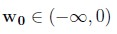
Figure from the original question paper
  1. A
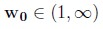
    Figure from the original question paper
  2. B
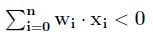
    Figure from the original question paper
  3. C
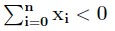
    Figure from the original question paper
  4. D
    Figure from the original question paper
  5. E
    Figure from the original question paper
Show answer

Correct answer

  • E
    Figure from the original question paper

Question 3

+3 marksOne correct option
Figure from the original question paper
  1. A

    A → 0.01 , B → 0.001 , C → 1.0

  2. B

    A → 0.001 , B → 0.01 , C → 1.0

  3. C

    A → 1.0 , B → 0.001 , C → 0.01

  4. D

    A → 0.01 , B → 1.0 , C → 0.001

Show answer

Correct answer

  • B

    A → 0.001 , B → 0.01 , C → 1.0

Question 4

+3 marksOne correct option

Which of the following statements best describes the primary representational advantage of a Multi-Layer Perceptron (MLP) over a Single-Layer Perceptron (SLP)?

  1. A

    An MLP can learn non-linear decision boundaries, allowing it to classify datathat is not linearly separable.

  2. B

    An MLP converges faster than an SLP on linearly separable data because itshidden layers accelerate learning.

  3. C

    An MLP is less prone to overfitting than an SLP because it has moreparameters to capture the data distribution.

  4. D

    An MLP can only be used for classification tasks, whereas an SLP can be usedfor both classification and regression.

Show answer

Correct answer

  • A

    An MLP can learn non-linear decision boundaries, allowing it to classify datathat is not linearly separable.

Question 5

+3 marksOne correct option

A data scientist is training a deep learning model on a massive dataset containing billions of data points. They find that using traditional Batch Gradient Descent (GD) is computationally infeasible. What is the primary reason that makes Batch GD impractical for this task, thus requiring an alternative like Stochastic Gradient Descent (SGD)?

  1. A

    It is impossible to fit the entire large dataset into the computer’s memory(RAM) at once.

  2. B

    The gradient calculated by Batch GD is often too noisy and inaccurate, leadingto poor convergence.

  3. C

    Batch GD is guaranteed to get stuck in sharp local minima, whereas SGD canescape them.

  4. D

    Batch GD requires calculating the gradient of the loss function with respect tothe parameters over the entire dataset for a single update, which is computationally very expensive.

Show answer

Correct answer

  • D

    Batch GD requires calculating the gradient of the loss function with respect tothe parameters over the entire dataset for a single update, which is computationally very expensive.

Question 6

+3 marksOne correct option
Figure from the original question paper
  1. A
    Figure from the original question paper
  2. B
    Figure from the original question paper
  3. C
    Figure from the original question paper
  4. D
    Figure from the original question paper
Show answer

Correct answer

  • B
    Figure from the original question paper

Question 7

+3 marksOne or more correct options

You are adapting a neural network that was originally designed for a 10-class image classification problem to perform a regression task, specifically to predict the price of a car. Which of the following modifications are essential or standard practice for this conversion?

Select all that apply.

  1. A

    Change the activation function of the final output layer to a linear function.

  2. B

    Set the number of neurons in the output layer to one.

  3. C

    Change the loss function from Categorical Cross-Entropy to Mean SquaredError (MSE).

  4. D

    Use accuracy as the primary metric to evaluate the model’s performance.

  5. E

    Keep the softmax activation function in the output layer to scale the predictedprice.

Show answer

Correct answers

  • A

    Change the activation function of the final output layer to a linear function.

  • B

    Set the number of neurons in the output layer to one.

  • C

    Change the loss function from Categorical Cross-Entropy to Mean SquaredError (MSE).

Question 8

+3 marksWritten answer
Figure from the original question paper
Show answer

A written answer, not marked automatically.

Question 9

+4 marksWritten answer
Figure from the original question paper
Show answer

A written answer, not marked automatically.

Question 10

+1 markWritten answer

Based on the above data, answer the given subquestions.

Based on the above data, answer the given subquestions.

What is the value of the output of the hidden layer? (Answer correct upto two digits after the decimal)

Show answer

A written answer, not marked automatically.

Question 11

+1 markWritten answer

Based on the above data, answer the given subquestions.

Based on the above data, answer the given subquestions.

What is the value of the cross entropy loss? (use natural log). (Answer correct upto two digits after the decimal)

Show answer

A written answer, not marked automatically.

Question 12

+2 marksWritten answer

Based on the above data, answer the given subquestions.

Based on the above data, answer the given subquestions.
Figure from the original question paper
Show answer

A written answer, not marked automatically.

Question 13

+2 marksWritten answer

Based on the above data, answer the given subquestions.

Based on the above data, answer the given subquestions.

Use cross entropy loss and compute the gradient of W1 which is the weight between input and hidden layer. (consider upto two digits after the decimal for all the calculations)

Show answer

A written answer, not marked automatically.

Question 14

+1 markOne correct option

Based on the above data, answer the given subquestions.

Based on the above data, answer the given subquestions.
Figure from the original question paper
  1. A
    Figure from the original question paper
  2. B
    Figure from the original question paper
  3. C
    Figure from the original question paper
  4. D
    Figure from the original question paper
Show answer

Correct answer

  • A
    Figure from the original question paper

Question 15

+1 markOne correct option

Based on the above data, answer the given subquestions.

Based on the above data, answer the given subquestions.
Figure from the original question paper
  1. A
    Figure from the original question paper
  2. B
    Figure from the original question paper
  3. C
    Figure from the original question paper
  4. D
    Figure from the original question paper
Show answer

Correct answer

  • A
    Figure from the original question paper

Question 16

+1 markOne correct option

Based on the above data, answer the given subquestions.

Based on the above data, answer the given subquestions.
Figure from the original question paper
  1. A
    Figure from the original question paper
  2. B
    Figure from the original question paper
  3. C
    Figure from the original question paper
  4. D
    Figure from the original question paper
Show answer

Correct answer

  • A
    Figure from the original question paper

Question 17

+1 markOne correct option

Based on the above data, answer the given subquestions.

Based on the above data, answer the given subquestions.
Figure from the original question paper
  1. A
    Figure from the original question paper
  2. B
    Figure from the original question paper
  3. C
    Figure from the original question paper
  4. D
    Figure from the original question paper
Show answer

Correct answer

  • B
    Figure from the original question paper

Question 18

+2 marksOne correct option

Suppose you build a neural network with one hidden layer that uses sigmoid as an activation function and an output layer with a softmax activation function. You initialize the hidden layer weights W1 randomly and set the output layer weights W2 to all zeros. Assume the bias is set to be zero. You train the network using stochastic gradient descent. Based on the above data, answer the given subquestions.

After one iteration of gradient descent, will the new weight for W1 be the same as the previous weight?

  1. A

    Yes

  2. B

    No

Show answer

Correct answer

  • A

    Yes

Question 19

+2 marksOne correct option

Suppose you build a neural network with one hidden layer that uses sigmoid as an activation function and an output layer with a softmax activation function. You initialize the hidden layer weights W1 randomly and set the output layer weights W2 to all zeros. Assume the bias is set to be zero. You train the network using stochastic gradient descent. Based on the above data, answer the given subquestions.

After one iteration of gradient descent, will the new weight for W2 be the same as the previous weight?

  1. A

    Yes

  2. B

    No

Show answer

Correct answer

  • B

    No

Question 20

+1 markWritten answer

Based on the above data, answer the given subquestions.

Based on the above data, answer the given subquestions.
Show answer

A written answer, not marked automatically.

Question 21

+1 markWritten answer

Based on the above data, answer the given subquestions.

Based on the above data, answer the given subquestions.
Show answer

A written answer, not marked automatically.

Question 22

+1 markWritten answer

Suppose you build a neural network with one hidden layer that uses sigmoid as an activation function and an output layer with a softmax activation function. You initialize the hidden layer weights W1 randomly and set the output layer weights W2 to all zeros. Assume the bias is set to be zero. You train the network using stochastic gradient descent. Based on the above data, answer the given subquestions.

Show answer

A written answer, not marked automatically.