Quiz Space

May 2023 term · Mathematics for Data Science II · BSMA1003

Maths 2 End Term: 3 September 2023, Set 1 (May 2023 term)

The IIT Madras BS Mathematics for Data Science II (Maths 2) End Term paper sat on 3 Sept 2023, in the May 2023 term, set 1: 28 questions for 54 marks in 180 minutes. Every question is below with its answer. Take it as a timed mock test to be marked, or read it through first.

Questions
28
Marks
54
Duration
180 min
MCQ
9
MSQ
11
Written
8

Updated

Official paper: 2023 Sep03: IIT M DEGREE ET1 EXAM QPE2 · No negative marking.

Question 1

+1 markOne correct option

THIS IS QUESTION PAPER FOR THE SUBJECT "FOUNDATION LEVEL : SEMESTER 2: MATHEMATICS FOR DATA SCIENCE 2 (COMPUTER BASED EXAM)" ARE YOU SURE YOU HAVE TO WRITE EXAM FOR THIS SUBJECT? CROSS CHECK YOUR HALL TICKET TO CONFIRM THE SUBJECTS TO BE WRITTEN. (IF IT IS NOT THE CORRECT SUBJECT, PLS CHECK THE SECTION AT THE TOP FOR THE SUBJECTS REGISTERED BY YOU)

  1. A

    YES

  2. B

    NO

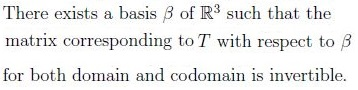
Show answer

Correct answer

  • A

    YES

Question 2

+2 marksOne correct option
Figure from the original question paper
  1. A

    (0.8, 0.6)

  2. B

    (-0.8, 0.6)

  3. C

    (-0.8, -0.6)

  4. D

    (0.8, -0.6)

Show answer

Correct answer

  • B

    (-0.8, 0.6)

Question 3

+2 marksOne or more correct options
Figure from the original question paper

Select all that apply.

  1. A
    Figure from the original question paper
  2. B
    Figure from the original question paper
  3. C
    Figure from the original question paper
  4. D
    Figure from the original question paper
Show answer

Correct answers

  • B
    Figure from the original question paper
  • C
    Figure from the original question paper

Question 4

+2 marksOne or more correct options
Figure from the original question paper

Select all that apply.

  1. A
    Figure from the original question paper
  2. B
    Figure from the original question paper
  3. C
    Figure from the original question paper
  4. D
    Figure from the original question paper
Show answer

Correct answers

  • A
    Figure from the original question paper
  • D
    Figure from the original question paper

Question 5

+2 marksOne or more correct options
Figure from the original question paper

Select all that apply.

  1. A
    Figure from the original question paper
  2. B
    Figure from the original question paper
  3. C
    Figure from the original question paper
  4. D
    Figure from the original question paper
Show answer

Correct answers

  • C
    Figure from the original question paper
  • D
    Figure from the original question paper

Question 6

+2 marksOne or more correct options
Figure from the original question paper

Select all that apply.

  1. A

    {(−1, 1, 0), (−1,−1, 2)} is a basis for the range space of PU .

  2. B

    {(−1, 1, 0), (−1,−1, 2)} is a basis for the null space of PU .

  3. C

    {(1, 1, 1)} is a basis for the range space of PV .

  4. D

    {(1, 1, 1)} is a basis for the null space of PV .

Show answer

Correct answers

  • B

    {(−1, 1, 0), (−1,−1, 2)} is a basis for the null space of PU .

  • D

    {(1, 1, 1)} is a basis for the null space of PV .

Question 7

+2 marksOne or more correct options
Figure from the original question paper

Select all that apply.

  1. A
    Figure from the original question paper
  2. B
    Figure from the original question paper
  3. C
    Figure from the original question paper
  4. D
    Figure from the original question paper
Show answer

Correct answers

  • B
    Figure from the original question paper
  • C
    Figure from the original question paper

Question 8

+2 marksOne or more correct options
Figure from the original question paper

Select all that apply.

  1. A

    The partial derivatives for f exist everywhere but directional derivatives neednot exist at the origin.

  2. B

    All directional derivatives at the origin exist for the function f.

  3. C

    At (0, 0), the directional derivative of f exists in the direction of x-axis.

  4. D

    The partial derivatives for f do not exist at the origin.

Show answer

Correct answers

  • A

    The partial derivatives for f exist everywhere but directional derivatives neednot exist at the origin.

  • C

    At (0, 0), the directional derivative of f exists in the direction of x-axis.

Question 9

+3 marksOne or more correct options
Figure from the original question paper

Select all that apply.

  1. A
    Figure from the original question paper
  2. B
    Figure from the original question paper
  3. C
    Figure from the original question paper
  4. D
    Figure from the original question paper
Show answer

Correct answers

  • C
    Figure from the original question paper
  • D
    Figure from the original question paper

Question 10

+3 marksOne or more correct options

Which of the following statement(s) about similar matrices is/are true?

Select all that apply.

  1. A
    Figure from the original question paper
  2. B
    Figure from the original question paper
  3. C
    Figure from the original question paper
  4. D
    Figure from the original question paper
Show answer

Correct answers

  • C
    Figure from the original question paper
  • D
    Figure from the original question paper

Question 11

+3 marksOne or more correct options
Figure from the original question paper

Select all that apply.

  1. A
    Figure from the original question paper
  2. B
    Figure from the original question paper
  3. C
    Figure from the original question paper
  4. D
    Figure from the original question paper
Show answer

Correct answers

  • B
    Figure from the original question paper
  • C
    Figure from the original question paper

Question 12

+1 markWritten answer
Figure from the original question paper
Show answer

A written answer, not marked automatically.

Question 13

+2 marksWritten answer
Figure from the original question paper
Show answer

A written answer, not marked automatically.

Question 14

+2 marksWritten answer
Figure from the original question paper
Show answer

A written answer, not marked automatically.

Question 15

+2 marksOne correct option

Based on the above data, answer the given subquestions.

Based on the above data, answer the given subquestions.

Choose the correct option to match the affine subspace of Row 1 with the associated subspaces and dimension.

  1. A
    Figure from the original question paper
  2. B
    Figure from the original question paper
  3. C
    Figure from the original question paper
  4. D
    Figure from the original question paper
Show answer

Correct answer

  • A
    Figure from the original question paper

Question 16

+2 marksOne correct option

Based on the above data, answer the given subquestions.

Based on the above data, answer the given subquestions.

Choose the correct option to match the affine subspace of Row 2 with the associated subspaces and dimension.

  1. A
    Figure from the original question paper
  2. B
    Figure from the original question paper
  3. C
    Figure from the original question paper
  4. D
    Figure from the original question paper
Show answer

Correct answer

  • B
    Figure from the original question paper

Question 17

+2 marksOne correct option

Based on the above data, answer the given subquestions.

Based on the above data, answer the given subquestions.

Choose the correct option to match the affine subspace of Row 3 with the associated subspaces and dimension.

  1. A
    Figure from the original question paper
  2. B
    Figure from the original question paper
  3. C
    Figure from the original question paper
  4. D
    Figure from the original question paper
Show answer

Correct answer

  • B
    Figure from the original question paper

Question 18

+2 marksOne correct option

Based on the above data, answer the given subquestions.

Based on the above data, answer the given subquestions.
Figure from the original question paper
  1. A
    Figure from the original question paper
  2. B
    Figure from the original question paper
  3. C
    Figure from the original question paper
Show answer

Correct answer

  • B
    Figure from the original question paper

Question 19

+2 marksOne correct option

Based on the above data, answer the given subquestions.

Based on the above data, answer the given subquestions.
Figure from the original question paper
  1. A
    Figure from the original question paper
  2. B
    Figure from the original question paper
  3. C
    Figure from the original question paper
Show answer

Correct answer

  • A
    Figure from the original question paper

Question 20

+2 marksOne correct option

Based on the above data, answer the given subquestions.

Based on the above data, answer the given subquestions.
Figure from the original question paper
  1. A
    Figure from the original question paper
  2. B
    Figure from the original question paper
  3. C
    Figure from the original question paper
Show answer

Correct answer

  • C
    Figure from the original question paper

Question 21

+3 marksOne correct option
Figure from the original question paper

Choose the appropriate linear transformation T for the matrix A.

  1. A
    Figure from the original question paper
  2. B
    Figure from the original question paper
  3. C
    Figure from the original question paper
  4. D
    Figure from the original question paper
Show answer

Correct answer

  • C
    Figure from the original question paper

Question 22

+3 marksOne or more correct options
Figure from the original question paper

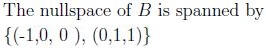
Let B be the matrix corresponding to the linear transformation T with respect to the basis {(1, 0, 0), (0, 1, 0), (0, 0, 1)} for both domain and codomain. Which of the following statement(s) is/are true?

Select all that apply.

  1. A
    Figure from the original question paper
  2. B
    Figure from the original question paper
  3. C
    Figure from the original question paper
  4. D
    Figure from the original question paper
Show answer

Correct answers

  • A
    Figure from the original question paper
  • C
    Figure from the original question paper

Question 23

+1 markWritten answer
Figure from the original question paper

Let B be the matrix corresponding to the linear transformation T with respect to the basis {(1, 0, 0), (0, 1, 0), (0, 0, 1)} for both domain and codomain. The trace of B is

Show answer

A written answer, not marked automatically.

Question 24

+1 markWritten answer
Figure from the original question paper

Let B be the matrix corresponding to the linear transformation T with respect to the basis {(1, 0, 0), (0, 1, 0), (0, 0, 1)} for both domain and codomain. The determinant of B is

Show answer

A written answer, not marked automatically.

Question 25

+2 marksOne or more correct options
Figure from the original question paper

Which of the following statement(s) about T is/are true?

Select all that apply.

  1. A
    Figure from the original question paper
  2. B
    Figure from the original question paper
  3. C
    Figure from the original question paper
  4. D
    Figure from the original question paper
Show answer

Correct answers

  • B
    Figure from the original question paper
  • C
    Figure from the original question paper

Question 26

+1 markWritten answer

Based on the above data, answer the given subquestions.

Based on the above data, answer the given subquestions.
Show answer

A written answer, not marked automatically.

Question 27

+1 markWritten answer

Based on the above data, answer the given subquestions.

Based on the above data, answer the given subquestions.
Show answer

A written answer, not marked automatically.

Question 28

+1 markWritten answer
Figure from the original question paper
Show answer

A written answer, not marked automatically.