

uiz Space

January 2026 term · Deep Learning Practice · BSDA5013

Deep Learning Practice Quiz 2: 12 April 2026 (January 2026 term)

The IIT Madras BS Deep Learning Practice (Deep Learning Practice) Quiz 2 paper sat on 12 Apr 2026, in the January 2026 term: 18 questions for 52 marks in 120 minutes. Every question is below with its answer. Take it as a timed mock test to be marked, or read it through first.

Questions
18
Marks
52
Duration
120 min
MCQ
10
Written
5
MSQ
3

Updated

Official paper: Deep Learning Practice 06 Apr 26 · No negative marking.

Question 1

+4 marksOne correct option

The tensor has shape: When using a pre-trained Transformer-based model (such as Wav2Vec 2.0) for a downstream classification task like Language Identification, what is the primary purpose of applying Mean Pooling across the sequence dimension?

The tensor  has shape:  When using a pre-trained Transformer-based model (such as Wav2Vec 2.0) for a downstream classifi
  1. A

    To reduce the sampling rate of the audio to make it compatible with standard deep learning layers.

  2. B

    To convert a variable-length sequence of hidden vectors into a single fixed- length representation that summarizes the entire utterance.

  3. C

    To ensure that the model focuses only on the most intense amplitude peaks of the speech signal.

  4. D

    To reverse the effects of the Convolutional Neural Network (CNN) encoder and return the data to the time domain.
Show answer

Correct answer

  • B

    To convert a variable-length sequence of hidden vectors into a single fixed- length representation that summarizes the entire utterance.

Question 2

+4 marksOne correct option

When using Wav2Vec2Model to extract hidden states for a downstream task, you set in the model call. In PyTorch, what is the most efficient way to ensure the model does not calculate gradients or update weights during this feature extraction process, thereby saving memory and computation?

  1. A

    Use before passing the audio through the model.

  2. B

    Wrap the extraction code block with the : context manager.

  3. C

    Manually set each layer's attribute to False using a for loop before every forward pass.

  4. D

    Use the function on the output tensor to remove unnecessary dimensions.

Show answer

Correct answer

  • B

    Wrap the extraction code block with the : context manager.

Question 3

+4 marksOne correct option

When fine-tuning a Whisper model using the Hugging Face transformers library, which of the following statements best describes the role and behavior of the WhisperProcessor?

  1. A

    It is a standalone model that converts audio directly into text before passing it to the WhisperForConditionalGeneration class.

  2. B

    It is a wrapper class that combines a WhisperFeatureExtractor (for audio) and a WhisperTokenizer (for text) into a single object to simplify data preprocessing and padding.

  3. C

    It is primarily used to change the sampling_rate of the raw audio files to 16,000 Hz during the dataset.map() phase.

  4. D

    It is a specialized loss function that calculates the Word Error Rate (WER) by comparing the model's audio features directly against the ground-truth text label

Show answer

Correct answer

  • B

    It is a wrapper class that combines a WhisperFeatureExtractor (for audio) and a WhisperTokenizer (for text) into a single object to simplify data preprocessing and padding.

Question 4

+4 marksOne correct option

When working with TTS models like SpeechT5, what is the role of the speaker_embeddings?

  1. A

    To translate the text into different languages before speaking.

  2. B

    To define the specific vocal characteristics (voice identity) of the speaker.

  3. C

    To remove background noise from the generated file.

  4. D

    To increase the speed of the audio generation.

Show answer

Correct answer

  • B

    To define the specific vocal characteristics (voice identity) of the speaker.

Question 5

+3 marksWritten answer

Consider the following code snippet: Assume that the audio sample stored in has: : 48,000• : 13,440,000• What is the duration of the audio in seconds?

Show answer

A written answer, not marked automatically.

Question 6

+3 marksWritten answer

Calculate the Word Error Rate (WER) for the following example: Actual Sentence : ASR prediction :

Show answer

A written answer, not marked automatically.

Question 7

+4 marksOne or more correct options

In a standard modular speaker diarization pipeline, which of the following processes are responsible for identifying and grouping unique speaker characteristics from speech segments?

Select all that apply.

  1. A

    Speaker Embedding Extraction: Generating numerical representations (e.g., x- vectors) that capture the identity-bearing features of the vocal signal.

  2. B

    Part-of-Speech (POS) Tagging: Assigning grammatical categories to words to determine the syntactic structure of the conversation.

  3. C

    Clustering: Applying algorithms like Spectral Clustering or AHC to group embeddings into clusters corresponding to individual speakers.

  4. D

    Named Entity Recognition (NER): Extracting proper nouns and specific entities from the transcribed text to identify participants by name.

  5. E

    Distance/Similarity Metric Computation: Calculating the mathematical relationship (e.g., Cosine similarity or distances) between different speech segments.

Show answer

Correct answers

  • A

    Speaker Embedding Extraction: Generating numerical representations (e.g., x- vectors) that capture the identity-bearing features of the vocal signal.

  • C

    Clustering: Applying algorithms like Spectral Clustering or AHC to group embeddings into clusters corresponding to individual speakers.

  • E

    Distance/Similarity Metric Computation: Calculating the mathematical relationship (e.g., Cosine similarity or distances) between different speech segments.

Question 8

+4 marksOne or more correct options

Whisper can be used as a component in a diarization pipeline in which of the following ways?

Select all that apply.

  1. A

    As the automatic speech recognition backend for transcription after diarization

  2. B

    To provide word-level timestamps for aligning speaker segments

  3. C

    As the primary clustering algorithm for speaker embeddings

  4. D

    As the speaker embedding extractor

Show answer

Correct answers

  • A

    As the automatic speech recognition backend for transcription after diarization

  • B

    To provide word-level timestamps for aligning speaker segments

Question 9

+4 marksOne or more correct options

When implementing diarization with SpeechBrain and PyTorch, which of the following practices are recommended? (Select all that apply)

Select all that apply.

  1. A

    Use .to(device) to move models to GPU

  2. B

    Normalize audio waveforms before feeding to the embedding model

  3. C

    Use batch processing for extracting embeddings from multiple segments

  4. D

    Pass raw text tokens to the speaker encoder

  5. E

    Use torch.no_grad() during inference to save memory

Show answer

Correct answers

  • A

    Use .to(device) to move models to GPU

  • B

    Normalize audio waveforms before feeding to the embedding model

  • C

    Use batch processing for extracting embeddings from multiple segments

  • E

    Use torch.no_grad() during inference to save memory

Question 10

+2 marksOne correct option

You are building an ASR pipeline for Assamese. Complete the missing parts of the script to ensure the audio is resampled, features are extracted, and the trainer is initialized correctly.

Based on the above data, answer the given subquestions.

You are building an ASR pipeline for Assamese. Complete the missing parts of the script to ensure the audio is resampled

Choose the option from below to fill in the blank at A.

  1. A

    apply

  2. B

    cast_column

  3. C

    transform

  4. D

    batch_decode

Show answer

Correct answer

  • B

    cast_column

Question 11

+2 marksOne correct option

You are building an ASR pipeline for Assamese. Complete the missing parts of the script to ensure the audio is resampled, features are extracted, and the trainer is initialized correctly.

Based on the above data, answer the given subquestions.

You are building an ASR pipeline for Assamese. Complete the missing parts of the script to ensure the audio is resampled

Choose the option from below to fill in the blank at B.

  1. A

    WhisperTokenizer

  2. B

    WhisperProcessor

  3. C

    WhisperForConditionalGeneration

  4. D

    Seq2SeqTrainingArguments

Show answer

Correct answer

  • A

    WhisperTokenizer

Question 12

+2 marksOne correct option

You are building an ASR pipeline for Assamese. Complete the missing parts of the script to ensure the audio is resampled, features are extracted, and the trainer is initialized correctly.

Based on the above data, answer the given subquestions.

You are building an ASR pipeline for Assamese. Complete the missing parts of the script to ensure the audio is resampled

Choose the option from below to fill in the blank at C.

  1. A

    feature_extractor

  2. B

    tokenizer

  3. C

    collator

  4. D

    None of these

Show answer

Correct answer

  • A

    feature_extractor

Question 13

+3 marksOne correct option

output of print(vocabs) is as given below

Based on the above data, answer the given subquestions.

output of print(vocabs) is as given below

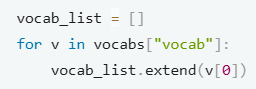
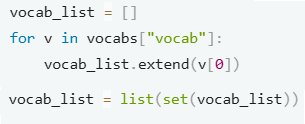
For the given code what needs to be filled in place of missing code to get the vocabulary which consists of only unique character ?

  1. A
    Figure from the original question paper
  2. B

    —

  3. C
    Figure from the original question paper
  4. D
    Figure from the original question paper
Show answer

Correct answer

  • C
    Figure from the original question paper

Question 14

+2 marksWritten answer

output of print(vocabs) is as given below

Based on the above data, answer the given subquestions.

output of print(vocabs) is as given below

If is generated correctly what would be the length of it ?

Show answer

A written answer, not marked automatically.

Question 15

+3 marksOne correct option

In the context of Hugging Face TTS, what is the purpose of the 'Vocoder' component?

  1. A

    To translate the input text into a different language.

  2. B

    To tokenize the text into sub-word units.

  3. C

    To convert intermediate acoustic features (like mel-spectrograms) into audible waveforms.

  4. D

    To compress the final audio file into a ZIP format.

Show answer

Correct answer

  • C

    To convert intermediate acoustic features (like mel-spectrograms) into audible waveforms.

Question 16

+2 marksOne correct option

Why is it important to normalize or resample reference audio to 16,000 Hz when extracting speaker embeddings for models like SpeechT5?

  1. A

    To make the file size as large as possible.

  2. B

    Because Python cannot process any frequency higher than 16kHz.

  3. C

    Because 16kHz is the highest quality audio humans can hear.

  4. D

    Because the model was specifically trained on 16kHz audio data.

Show answer

Correct answer

  • D

    Because the model was specifically trained on 16kHz audio data.

Question 17

+1 markWritten answer

You are building an ASR pipeline for Assamese. Complete the missing parts of the script to ensure the audio is resampled, features are extracted, and the trainer is initialized correctly.

Based on the above data, answer the given subquestions.

You are building an ASR pipeline for Assamese. Complete the missing parts of the script to ensure the audio is resampled
Show answer

A written answer, not marked automatically.

Question 18

+1 markWritten answer

output of print(vocabs) is as given below

Based on the above data, answer the given subquestions.

output of print(vocabs) is as given below
Show answer

A written answer, not marked automatically.
